Showing posts with label arts. Show all posts

Friday, April 06, 2012

Celebrating Etsy artists: Photography

The Web can be a great source of inspiration and when I am looking for ideas, nothing inspires me more than looking at other artists' works. 

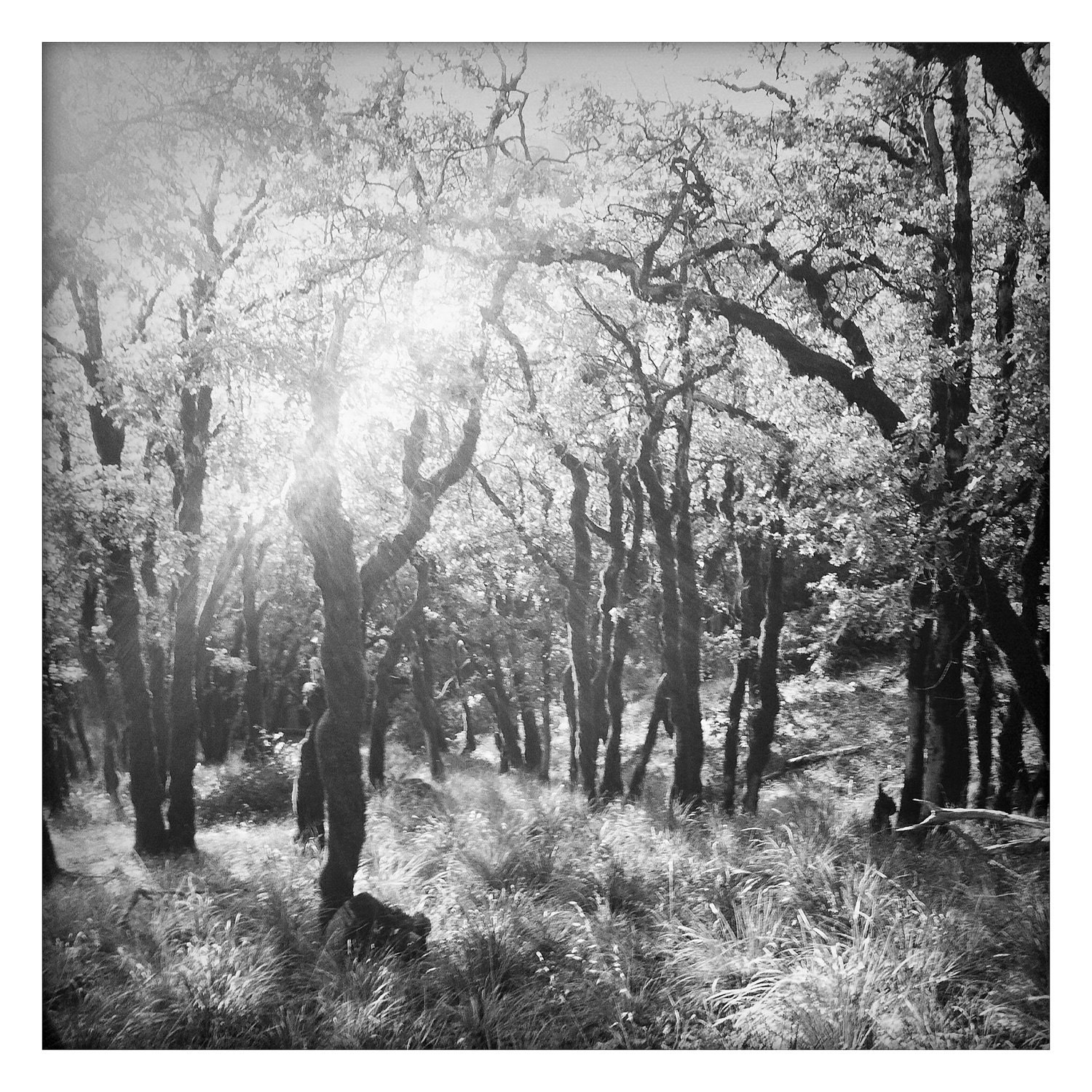
I am often surprised at the quality of the artworks one can find on Etsy. Today for example, I stumbled upon these fantastic black and white photographs from artists I didn't know before - and I'm glad I found them! Their pictures are all available for sale in their Etsy shops:


Windows by Peraboom, $19.
Oak trees in California by AdamOttavi, $40.


Unknown Pub Manchester by Everythingok, $20.


Bird in flight by Handsartshop, $25.
Kitty by Valeriavacca, $50.


And while I am at it, here are a few pictures from artists I personally like (not on Etsy):

Ice Cubes by Pauline Prenat. More pictures on her page here (website in French).
 
The Necessary Distance (2009) by Morgane Demarchi. More of her artworks on her flickr page here.
 
Untitled (Basilica de Guadalupe, Mexico City) by Carlos A.Vargas Arteaga. You can see more of his works on his website, here.


What do you think about these pictures? And what about you - do you have a favourite photographer or is there a photograph out there that you're especially fond of? If so, please share in the comments below ;-)

Friday, February 24, 2012

Great news!

The Hospices in Beaune, Burgundy.


I am finally back after great holidays in France! Unfortunately, because of family obligations I didn't have the time to look for interesting antiques to take back to the UK... Hopefully, next time will be different! Anyway, I spent a fantastic time in Beaune (Burgundy), and recommend it to anyone who's into great food, wine and beautiful landscapes and architecture!


When I came back home, I received some great news from Woolley and Wallis, the Salisbury salerooms: I am going to work in their Asian Art department in April-May! I am so eager to start as it'll be a great opportunity to experience work in a busy saleroom. I'll also learn a great deal about Chinese art and antiques - I am so excited about it! I will keep you posted as it goes ;-)


Website of Woolley and Wallis, Salisbury salerooms


Finally: about my DIY project. I now know what I am going to do with my cast-iron bracket! I need to find the right tools and accessories, but be sure that I'll post some pictures of the final product when it'll be done!

Bye for now, and have a great weekend ;-)
Ally

Wednesday, February 08, 2012

New antique DIY project: repurposed cast iron bracket

I finally have access to the Internet again and I am now trading from the other side of Oxford!
To start this new era, I found an exciting antique DIY project:


I discovered this antique cast iron bracket hidden under a bed of ivy in my new garden. As soon as I saw it, I knew it would end up in my studio :)

Now that I have cleaned it, I have a couple of decisions to make:

- do I get rid of the original white paint (half gone), then leave it in rusty colour, or do I paint it again in white (or black)?

- (the fun part) what do I do with it? Here are some ideas:
  • use it as a bed ornament or headboard...? 

(image from European Antique Market blog)
(Image from Man_of  Steel on Flickr)


  • use it as a banquette arm (love this idea - but difficult as I don't have this kind of sofa):

(Image from Susan Burger Living Beautifully)


  • Make some kind of lamp out of it?

(Image from Under Spanish Moss blog)
  • or just sell it? :o)

I need your help to decide wisely! What do you think would be the best option? Do you have any other idea about how to repurpose it? Please let me know in the comments below :-)

Thursday, January 19, 2012

Today's Etsy Treasure: Cocteau vases

 
Today's Etsy Treasure is not an antique per se but what I consider as an antique of the future . These two exquisite vases are available for $275.00 on Mascarajones's Etsy shop, here.

This set of vases by Jean Cocteau are incredibly stylish works of art. I am convinced that Cocteau's art is still undervalued and it is worth investing in it before it gets too expensive (which I am sure, will happen soon). Mid-century designs are doing incredibly well at the moment - in particular on Etsy- and these vases have such clean lines that they could fit in any interior.

Jean Cocteau (1889-1963) was a French all-round artist, famous for his poems, plays, designs, movies and art. His movie Beauty and the Beast (1946) is probably his most famous work (being French myself, I must say that I have seen it broadcast on French tv many, many times). This movie is a beautiful black and white adaptation of the well-known fairytale. Cocteau used new movie technology of the time to create a fantastic feeling of magic and surrealism. Even when I see it today, I can't help but feel transported by its lyrical quality. 


Beauty and the Beast (1946), Jean Cocteau.

 As an artist, Cocteau was close to the avant-garde movement before and after the WWI and knew  Modigliani, Picasso and Diaghilev, Coco Chanel, writers Proust and Gide, and composers Stravinsky, Satie and Poulenc. Even though he is often classified as a Surrealist, he denied having anything to do with the group of Surrealists including Salvador Dalí and André Breton.

Cocteau was deeply inspired by Greek mythology and many of his artworks include illustrations of famous myths. His theory was that commonplace objects were containers of hidden beauty, which the artist, through his gifts and eye, could bring out.

Profil aux Points. Dot Profile. Jean Cocteau, 1950.

 
Some of Cocteau's works will be exhibited alongside Picasso and Chagall paintings in the Lightbox gallery in Woking this week (read more about it on The Guardian website ). Also, a new museum dedicated to Jean Cocteau only just opened in Menton, France: the Jean Cocteau Museum.

The blind poet believes that he is the emperor of China, Jean Cocteau with birds, 1949.

Friday, January 06, 2012

Don Hong-Oai's photographs of Chinese landscapes


Yes, these are photographs. These amazing pictures of Chinese landscapes were taken by artist Don Hong-Oai who died in June 2004. You can read more about him and see more of his beautiful photographs here.

Happy new year!

I know I am  nearly a week late but I still wanted to wish you all a very happy new year! May it be full of joy, success and great antiques!

As for me, I started the new year with the flu (not great) and with some new books (really great!!)! Here they are:


I found in a charity shop 'Miller's Understanding Antiques' (which is great because it explains many things about furniture and glass- two kinds of antiques I don't have much knowledge about); a guide of the Ashmolean Museum with beautiful plates (that was on sale at the University of Oxford Shop); I ordered the 'Antiques Roadshow Quiz Book' and 'How to deal in Antiques' on Amazon, and finally, I subscribed to the Antiques Trade Gazette a couple of days ago and have already received their Art and Antiques 2012 Diary!

I am shivering with excitement (or it might be the flu...?) - I look forward to read them!

What about you: do you know any good book that you think every antiques lover should read? Please let me know in the comments below ;-)

Tuesday, December 27, 2011

The Heart Book of Denmark


Perhaps it is because I am watching Pride and Prejudice at the same time as I am writing this post, but I feel very much in the mood for love now - and what is more romantic-looking than this 'Heart Book' from Denmark?

The Heart Book is considered as the oldest ballad manuscript ever written in Denmark. It dates back to the beginning of the 1550s and is a collection of eighty-three love ballads. The book was compiled in the circle of King Christian III's Court but nobody knows who did it nor instigated its writing. The only thing known is that all the ballads - except no.66- were written by the same person.

The picture above shows the ballad no. 43, Store længsel, du gÃ¥r mig nær (Great Yearning, thou touches me). A mysterious Christen Masse, a later reader of the Heart Book, added notes on several pages, amongst which this prayer: "May god end and turn my misery into a good and happy ending amen". Nobody knows what he was referring to, but I like to think that this was the complaint of a tormented lover... What do you reckon? 

Underwater Ink Photography


Dreamy underwater ink photography taken by Mark Mawson. You can see more photographs of this series untitled "Aqueous Fluoreau" on the So Bad So Good blog. I absolutely love these pictures - it's incredible how something so simple can look so beautiful!

Sunday, December 04, 2011

Christmas-themed home decor: Vintage Santa

Don't know how to decorate the house for Christmas? Want to invest in art and find something to put above the fireplace? I have the perfect solution for you! What about Andy Warhol's "Santa Claus" from the "Myths" portfolio (1981)?


Not bad, eh? This screenprint on board with diamond dust (yes, diamond dust!) is available on artnet.com for a cool $16,000 (!). Hurry, only two days left!

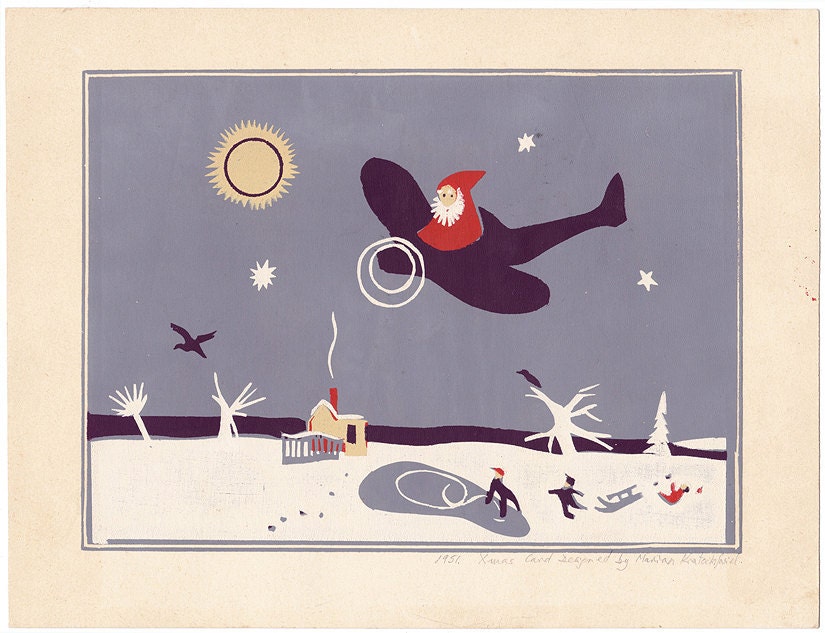
 Just in case you don't have $16,000 to spend on a Warhol print right now, here is a small selection of vintage Santas you can find on Etsy for a much cheaper price:

1958 Santa Claus advertisement for Coca Cola by FrenchFrouFrou available here ($12.95).


Santa Christmas Lemon Crate Label by Labelstone available here ($9.99).


'Nose like a cherry' Christmas print by SkitterCats available here ($12.00).


 1951 "Flying Santa" vintage Christmas print by ArcaniumAntiques available here ($75).


More Christmas-themed posts to come!

Wednesday, November 30, 2011


Picture of Picasso taken in 1949 by LIFE photographer Gjon Mili. More fantastic pictures of Picasso drawing with light on the Checks and Spots blog.

Tuesday, November 22, 2011

Collecting nineteenth-century Japanese photographs


Showing Japanese girls' hair, photograph from the collection of the Peabody Museum, Harward University.

Nineteenth-century Japanese photographs are not common and collecting them is a difficult hobby. However, they ARE out there - one only needs to look for them.

This first post is about antiques dear to my heart: nineteenth-century Japanese photographs. Since last year, I have been studying a collection of Japanese pictures at the Central Library in Edinburgh (Scotland). When I started collecting them, I was surprised to see that there is not much written about the market for Japanese photographs on the internet.

So, let's talk about it!

In the second half of the Nineteenth century, Japan underwent a fantastic transformation. Isolated from the rest of the world for nearly two centuries, the country was forced to open its ports to international trade by the American fleet of Commodore Matthew Perry in 1854. From then on, Japan received more and more visitors from the West. Some were hired by the government to help modernising the country (the 'oyatoi gaikokujin', honourable hired foreigners), but many were simple tourists attracted to this mysterious and exotic country. During this period, Japanese aesthetics became highly fashionable and although they were at first only known by an elite, they soon became highly popular amongst the lower classes too. Japanese woodblock prints famously inspired a whole generation of French Impressionists. In the UK, Japanese art also influenced Scottish artists such as Charles Rennie Mackintosh and the Glasgow Boys George Henry and Edward Hornel.


George Henry, Japanese Lady with a Fan, 1894. Kelvingrove Art Gallery and Museum, Glasgow.

As a result to this sudden interest for Japan, the local market for souvenirs developed. Westerners were eager to see more images of this 'untouched' Orient and the new medium of photography became a popular way of discovering it. Some European photographers and other entrepreneurs grabbed the opportunity to open studios in Japan, producing the type of photographs the Western market craved for: visions of a rather primitive society, closed to nature and with strange or barbaric customs. These studios became highly successful and names such as Felix Beato, Baron Raimund von Stillfried or Adolfo Farsari became famous in the photographic world for the exotic pictures they produced. Even though the westernisation of Japan was obvious in cities (with Japanese people adopting Western clothings, for example), the most popular photographs were those representing an old Japan of samurai, geisha or tattooed men in a primitive society.

These photographs were not cheap, though, and when they were bound together in large albums, they were true luxury items. These albums were sent to the West to be sold to wealthy Victorians in search of exoticism, or they were bought directly from the photographer in Japan. The client was then able to choose from the photographer's large collection which pictures to purchase for his own album .


Baron Raimund von Stillfried, Young Lady, hand-coloured albumen silver photograph, c. 1875. La Trobe Picture Collection.


 Where to find these photographs today? 

Nineteenth-century Japanese photographs are rare on Etsy, and since I have opened my Etsy store last year, I have only seen a couple of good quality ones – they were sold rather quickly, though. Japanese postcards are more common and much cheaper. Many are historically and aesthetically interesting; however their monetary value is much lower than the one of photographs. They also often date from a later period (around 1910). If you are interested in Japanese art and history, I recommend collecting these postcards: you can buy them online on Etsy or Ebay for a few pounds and they are real pieces of history.


Atago Hill at Shiba,Tokyo. Vintage Japanese postcard on sale by BeauBazaar on Etsy:  http://etsy.me/t2sLjN


If you are interested in real photographs like the ones pictured above, there are often some available on Ebay. I would also suggest antiques fairs and car boots; they are not common, but if you find one you will most probably do a great deal. I found some photographs in an antiques fair in Edinburgh; my favourite one shows a hand-painted portrait of a blind masseur with his client. I bought it for £5 and know that it is worth much more.

View of a Japanese city, from my personal collection.


The value usually varies according to the overall condition and the scene depicted; a simple black and white landscape can be worth not more than £20, whereas a hand-tinted, detailed picture of a geisha, if attributed to one of the famous photographer working in Japan during this period, can fetch up to four thousands pounds.
If you find a whole album for a reasonable price, don't hesitate and BUY IT. These albums can be extremely valuable, and they can be found on specialist websites for more than twenty thousand pounds!

A word of caution, however: there are people on both Etsy and Ebay who sell modern reproductions of these antique photographs. Be careful and make sure that the picture you are buying is a genuine antique. A way of doing so is (when you can) to check the back of the picture. An honest seller would not refuse to show you a picture of the back if you ask for it; if he does, there are chances that the picture on sale is a modern copy. The back of a vintage picture shall show signs of age (yellow colouration, humidity spots) that are usually a good sign of authenticity. 


Some interesting links: 


Ally D.